Bay window vs bow window: which adds more value in Ohio
Bay windows win on resale value in Ohio, bow windows win on light and view. Here's the 2026 cost and ROI breakdown for both, with real Ohio numbers.
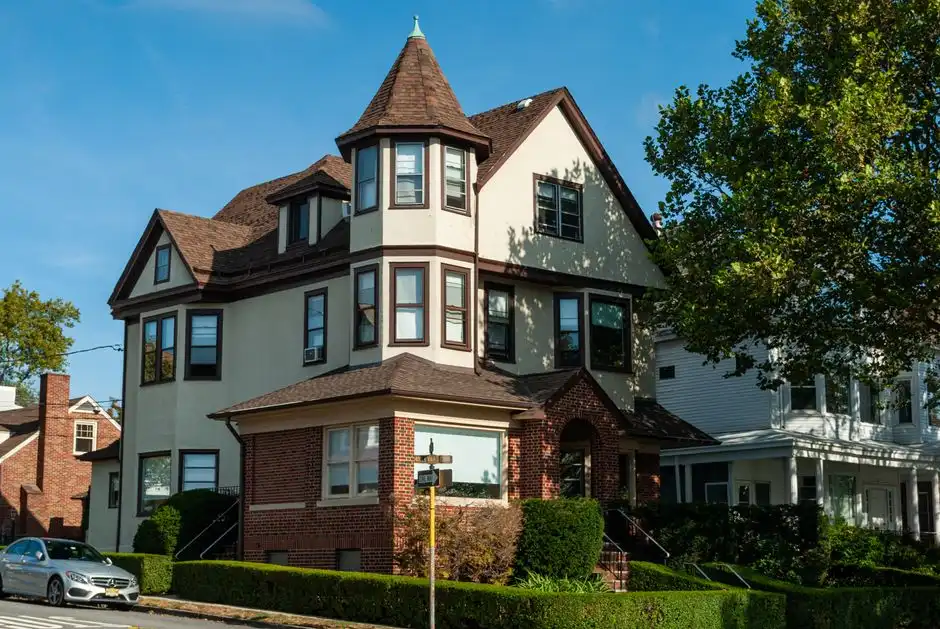
For most Ohio homes, a bay window adds more resale value than a bow window - typically 60 to 75 percent of the project cost back at sale, versus 45 to 60 percent for a bow. Bay windows win because they read as a distinct architectural feature in listing photos, they add usable floor space, and buyers in Cleveland, Columbus, and Cincinnati associate them with upgraded older homes. Bow windows still make sense when you want maximum glass and a curved view, but they are a harder sell to an appraiser.
This article breaks down the bay window vs bow window which adds more value in Ohio question with real 2026 pricing, the resale math, and the mistakes we see on installs across the state.
The short answer: bay windows add more resale value in Ohio
Bay windows add more resale value in Ohio than bow windows because they create the perception of extra square footage and they photograph better on MLS listings. A three-panel bay projecting 12 to 18 inches off the wall reads as a reading nook, a window seat, or a breakfast corner. A five-panel bow reads as a curved wall of glass - beautiful, but harder to furnish around.
Appraisers in Ohio tend to credit bay windows as a partial room addition. Bow windows get lumped into the general window-replacement category, which is a smaller line item. That gap is the whole answer in one paragraph.
What is the difference between a bay window and a bow window?
A bay window is a projecting window assembly made of three panels - a fixed center flanked by two angled operating windows - that juts out from the exterior wall at roughly 30 to 45 degrees. A bow window is a curved projection made of four or five narrower panels set at a gentler angle, usually 10 to 20 degrees, creating a smooth arc rather than a hard corner.
Both styles cantilever off the wall, both need a proper header and flashing detail, and both are common on Ohio homes built between 1890 and 1960. The practical differences come down to three things:
- Projection depth: bays project 12 to 24 inches; bows project 9 to 15 inches.
- Panel count: bays use 3 panels; bows use 4 or 5.
- Interior footprint: bays create a usable seat or shelf; bows create a curved ledge.
If you are weighing a single window swap versus a full projection, our team handles both single window replacement in Ohio and full projection installs, so we can tell you honestly which one your wall framing will support.
Bay window benefits Ohio homeowners notice first
Bay window benefits Ohio homeowners notice first are the extra floor space and the daylight that survives a gray January. A bay pushes 8 to 15 square feet of usable interior area into the room - enough for a bench, a plant shelf, or a small desk.
Because the side panels angle back toward the wall, a bay also cuts down on the harsh western sun that bakes Cleveland and Toledo living rooms in July. The center panel stays fixed, so you get one big unobstructed pane for the view and two smaller operable units for cross-ventilation.
On the exterior, a bay window with a proper roof cap and skirt is one of the strongest curb-appeal moves you can make on a 1920s Ohio four-square or bungalow. It breaks up a flat facade in a way a flat picture window never will.
Bow window benefits Ohio homeowners notice first
Bow window benefits Ohio homeowners notice first are the panoramic light and the softer interior curve. With four or five panels wrapping the corner, a bow pulls in 20 to 30 percent more daylight than a comparable bay, and it does it without the hard 90-degree corners that collect dust and block furniture placement.
Bows also distribute structural load more evenly across the header. On a wide opening - say 96 inches or more - a bow often needs less reinforcement than a bay of the same width, which can save money on framing.
The trade-off is thermal. More glass surface means more heat loss in an Ohio winter. A bow with double-pane Low-E argon glass will hold up fine, but a bow with builder-grade single panes will ice up along the bottom rail in January. If your home is in an older neighborhood like Residential window installation and replacement in Lakewood, where 1910s doubles and singles still dominate, we usually steer homeowners toward a bay unless the room genuinely needs the wrap-around view.
Bay window vs bow window cost in Ohio (2026 pricing)
Bay window vs bow window cost in Ohio in 2026 runs $3,200 to $7,800 installed for a standard bay, and $4,100 to $9,400 installed for a bow of comparable width. The bow costs more because it uses more panels, more glass, and a longer curved header.
Here is what drives the spread on a real Ohio quote:
- Size: a 72-inch bay is the cheapest common size; anything over 96 inches pushes into custom header territory.
- Glass package: double-pane Low-E adds $400 to $900; triple-pane adds $900 to $1,800.
- Frame material: vinyl is the baseline; fiberglass runs 20 to 35 percent more; wood-clad runs 40 to 60 percent more.
- Rotted framing: if the old projection leaked, expect $600 to $2,400 in carpentry before the new unit goes in.
- Roof cap and flashing: $350 to $800, and skipping it is the number-one reason bays leak within five years.
A bow window cost Ohio homeowners pay at the top end usually reflects five-panel custom sizing on a brick facade. A bay window cost Ohio homeowners pay at the low end is a stock 72-inch vinyl unit on a wood-frame wall with no rot.
Do bay windows add value to Ohio homes? The resale math
Do bay windows add value to Ohio homes? Yes - a bay typically returns 60 to 75 percent of its installed cost at resale, which is above the national average for window projects. On a $5,500 bay, that is roughly $3,300 to $4,100 back in perceived value at sale.
Bow windows return 45 to 60 percent. On a $6,500 bow, that is $2,900 to $3,900. The dollar gap is smaller than the percentage gap, but the bay still wins on ROI.
Two caveats. First, the return only holds if the projection is watertight and finished inside - a leaking bay is a liability, not an asset. Second, the return is strongest in older, character-driven neighborhoods where buyers are already paying a premium for original detail. In a 1990s subdivision in Residential window installation and replacement in Dublin, a bay is a nice upgrade; in a 1920s Cleveland Heights Tudor, it is a feature buyers actively hunt for.
Best window style for curb appeal in Ohio
The best window style for curb appeal in Ohio depends on the house, not the trend. On a brick colonial or four-square, a bay with a copper or standing-seam roof cap looks original and sells the house in photos. On a ranch or a contemporary, a bow reads cleaner because the curve matches the low roofline.
Three rules we give homeowners before they sign:
- Match the projection to the roofline. A tall bay on a low ranch looks bolted on.
- Match the trim to the existing window casings. Mismatched trim kills the upgrade.
- Never put a bay on a wall that faces the street if the neighboring houses all have flat facades - you will be the odd one out.
If you are replacing the whole front of the house, it is worth pricing the project as a set. Our full house window replacement in Ohio service bundles the projection with the flanking windows so the trim lines up and the crew only mobilizes once.
Common mistakes we see on bay and bow window projects
The most expensive mistake we see on bay and bow window projects is skipping the roof cap. Water gets behind the top flashing, rots the header, and by year five you are paying for the window twice.
Other repeat offenders:
- Under-sizing the header. A 96-inch projection needs a properly engineered header; a 2x6 nailed to the old framing will sag.
- Forgetting the interior finish. Drywall, trim, and paint add $400 to $1,200 and are almost never in the first quote.
- Ordering a bow for a room with no furniture plan. The curve looks great empty and awkward once a sofa is in the room.
- Ignoring the Ohio freeze-thaw cycle. Cantilevered projections move more than flush windows; cheap flashing fails fast here.
We see these most often on DIY-adjacent installs and on projects where the homeowner bought the unit online and hired a handyman. The unit is rarely the problem - the flashing and header detail is.
When to call a professional
Call a professional when the existing projection is leaking, when the header is sagging, or when the opening is wider than 72 inches. Those three conditions mean structural work, and structural work on a cantilevered window is not a weekend job.
We handle the whole scope - tear-out, framing repair, flashing, roof cap, glass, and interior trim - so you are not coordinating three trades. If you are comparing a bay window vs bow window for a specific room, our team will walk the wall with you and tell you which one your framing actually supports. You can see the full range of what we install on our Residential window installation and replacement in Ohio page.
Frequently Asked Questions
Which adds more value, bay window or bow window in Ohio?
A bay window adds more value in Ohio, returning roughly 60 to 75 percent of installed cost at resale versus 45 to 60 percent for a bow. Bays photograph better, add usable floor space, and appraisers credit them closer to a partial room addition.
Do bay windows increase home value in Ohio?
Yes. A $5,500 bay typically returns $3,300 to $4,100 in perceived value at sale. The return is strongest on pre-1960 homes in character neighborhoods, and it only holds if the projection is watertight and finished inside.
How much does a bay window cost in Ohio?
Expect $3,200 to $7,800 installed in 2026 for a standard three-panel bay. Size, glass package, frame material, and any rotted framing drive the spread. Custom sizes over 96 inches and triple-pane glass sit at the top of that range.
How much does a bow window cost in Ohio?
A bow window runs $4,100 to $9,400 installed in 2026. The premium over a bay comes from the extra panels, more glass, and the longer curved header. Five-panel custom bows on brick facades land at the high end.
Is a bay window or bow window better for an Ohio winter?
A bay holds heat better because it has less glass surface and fewer seams. A bow with double-pane Low-E argon glass performs fine, but a builder-grade bow will ice up along the bottom rail in a hard January. Insist on Low-E either way.
Get help with Residential window installation and replacement in Ohio
Whether you land on a bay or a bow, the install detail matters more than the style label. We quote the full scope - framing, flashing, roof cap, glass, and interior trim - so there are no surprises mid-project.
Call Residential window installation and replacement at +18333460519 to schedule a walk-through and get a written price on your projection.